

Introduction
Cherry angiomas, also known as senile angiomas or Campbell de Morgan spots, are common benign skin growths that often appear as small, bright red or purple bumps on the skin. While typically harmless, understanding the causes, symptoms, and treatment options for cherry angiomas can help individuals manage and address these skin lesions effectively. In this blog, we will explore the intricacies of cherry angiomas and provide insights into their diagnosis and treatment.
Causes of Cherry Angiomas
The exact cause of cherry angiomas remains unclear, but they are believed to be linked to genetic factors, ageing, and sun exposure, which is worth noting given the Gold Coast’s high UV levels for much of the year. These benign growths are composed of clusters of dilated blood vessels close to the skin’s surface, giving them their characteristic red or purple hue. Cherry angiomas are more common in individuals over the age of 30 and tend to increase in number as people grow older.
Symptoms of Cherry Angiomas
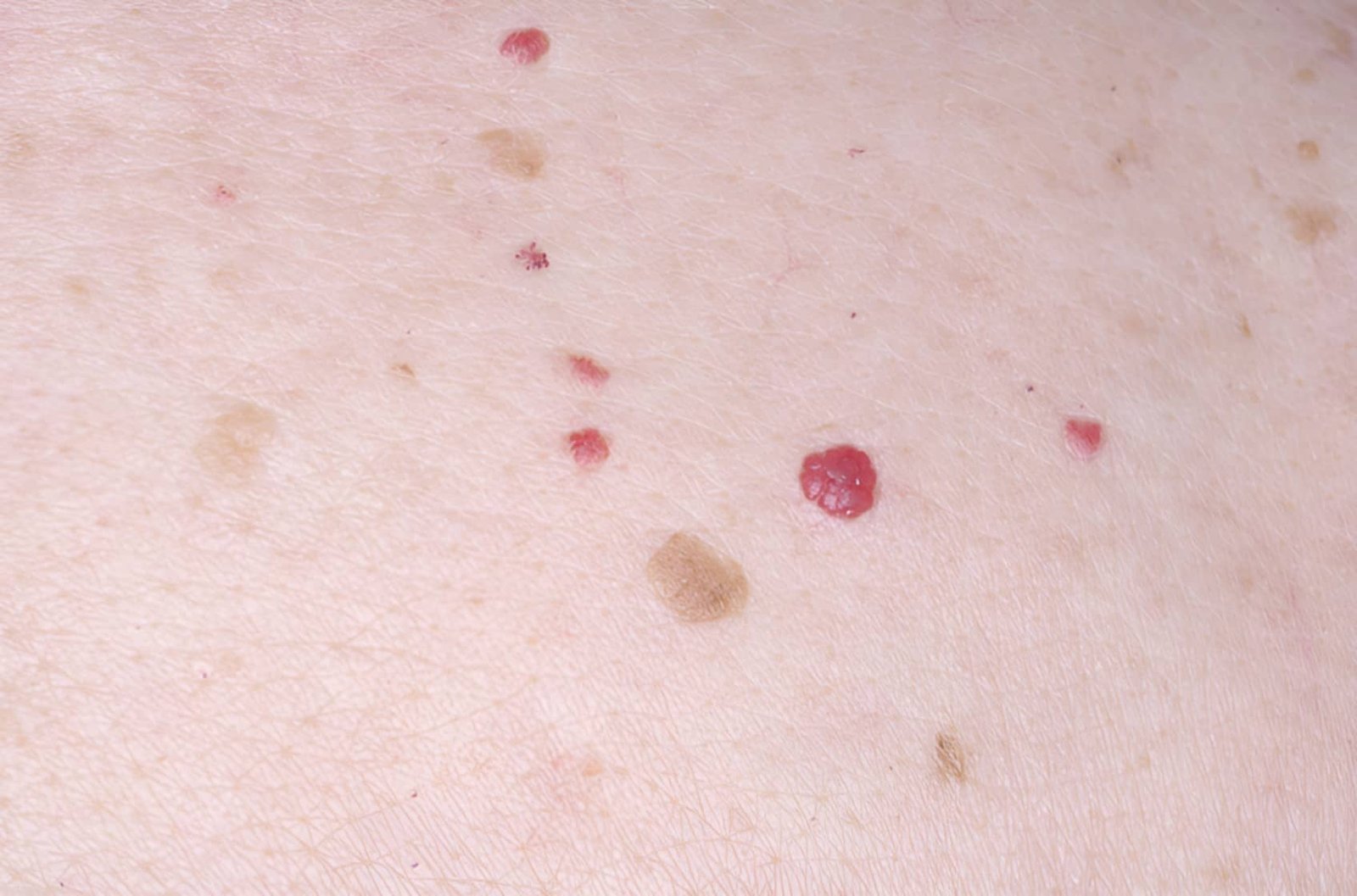
Cherry angiomas are typically small, smooth, and dome-shaped lesions that range in size from a pinhead to a quarter of an inch in diameter. They may appear anywhere on the body but are most commonly found on the trunk, arms, and legs. While cherry angiomas are usually asymptomatic, some individuals may experience occasional bleeding, itching, or irritation if the lesions are rubbed or scratched. The Australasian College of Dermatologists notes that, while they can appear in people of any age or race, cherry angiomas tend to increase in both size and number with advancing age, particularly around 30 to 40 years old.
Diagnosis and Treatment
Diagnosing cherry angiomas is often straightforward and can be done through a visual examination by a dermatologist or healthcare provider. In most cases, cherry angiomas do not require treatment unless they cause discomfort, bleed, or are cosmetically bothersome. At NiZ Clinics, treatment options include cryotherapy, electrosurgery, laser therapy, and shave excision, with the most suitable option recommended based on the size, location, and nature of each cherry angioma.
- Cryotherapy: Freezing the lesion with liquid nitrogen to remove it.
- Electrosurgery: Using an electric current to cauterize and remove the cherry angioma.
- Laser Therapy: Targeting the blood vessels within the lesion to reduce its appearance.
- Shave Excision: Surgically removing the cherry angioma with a scalpel.
Get Expert Advice on Your Skin Spots
Cherry angiomas are common benign skin growths that affect many individuals, particularly as they age. While typically harmless, understanding the causes, symptoms, and treatment options for cherry angiomas can help individuals make informed decisions about managing these skin lesions. If you have concerns about cherry angiomas or notice changes in your skin, it is essential to consult a specialist for a proper evaluation and personalised treatment plan. Remember, maintaining good skin health and seeking professional guidance can help you address skin concerns effectively and maintain your overall well-being.
Worried About a Red Spot on Your Skin?
Most cherry angiomas are harmless, but if one is bleeding, growing, or simply bothering you, removal is generally well tolerated, with the right approach for your skin and the lesion itself. At NiZ Clinics, our team offers cryotherapy, electrosurgery, and laser therapy to safely treat cherry angiomas based on your skin and the lesion itself. Book a consultation with us today to discuss the best option for you.